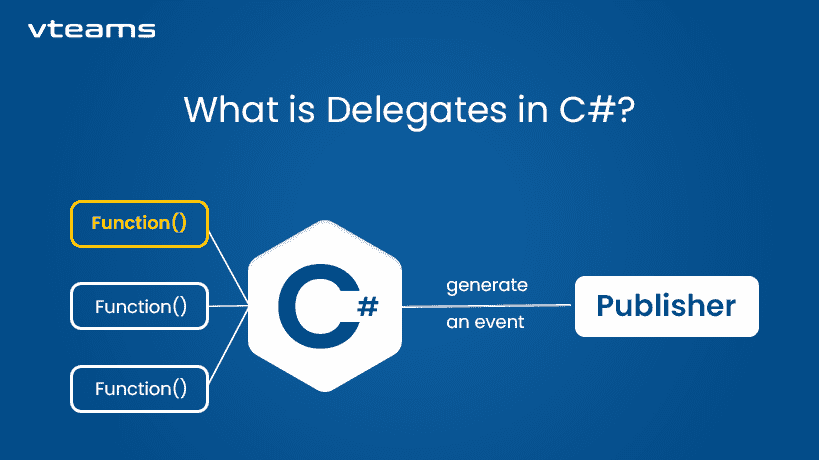
C# 에서는 Delegate 문법이 존재한다.
delegate 는 한국어로 "위임하다" 라는 뜻을 가진다.
도대체 어떤 것을 위임한다는 걸까?
오늘은 Delegate에 대해서 깊이 파헤쳐보자.
목차
- Delegate란?
- Delegate는 어떻게 동작하는가?
- Delegate의 기본 사용법
- Delegate 활용 예제
- Delegate와 이벤트의 관계
- Action과 Func
- Delegate를 사용하는 이유
1. Delegate란?
C#에서 delegate는 특정 메서드를 참조할 수 있는 타입이다. 쉽게 말해, 메서드에 대한 포인터 역할을 하며, 특정 메서드를 변수처럼 저장하고 실행할 수 있게 해준다. C/C++의 함수 포인터와 유사하지만, 타입 안전성을 보장하여 더 안전하게 사용할 수 있다.
2. Delegate는 어떻게 동작하는가?
Delegate는 메서드의 참조를 저장하고 있다가 필요할 때 해당 메서드를 호출하는 방식으로 동작한다.
Delegate를 활용하면 런타임에 실행할 메서드를 동적으로 변경할 수 있다.
3. Delegate의 기본 사용법
3.1 Delegate 선언 및 사용
using System;

// Delegate 선언
public delegate void MyDelegate(string message);

class Program
{
    // Delegate가 참조할 메서드 정의
    static void PrintMessage(string msg)
    {
        Console.WriteLine($"메시지: {msg}");
    }

    static void Main()
    {
        // Delegate 인스턴스 생성 및 메서드 연결
        MyDelegate del = new MyDelegate(PrintMessage);

        // Delegate 호출
        del("Hello, Delegate!");
    }
}
3.2 멀티캐스트 Delegate
Delegate는 여러 개의 메서드를 하나로 묶어 한 번에 실행할 수 있다.
using System;

public delegate void MultiDelegate();

class Program
{
    static void Method1() => Console.WriteLine("Method1 실행");
    static void Method2() => Console.WriteLine("Method2 실행");

    static void Main()
    {
        MultiDelegate del = Method1;
        del += Method2; // Method2 추가

        del(); // Method1과 Method2가 모두 실행됨
    }
}
4. Delegate의 활용 예제
Delegate는 다양한 용도로 활용된다. 대표적인 예로 이벤트(Event) 시스템이 있다.
using System;

// Delegate 선언
public delegate void Notify();

class EventPublisher
{
    public event Notify OnProcessCompleted; // 이벤트 선언

    public void Process()
    {
        Console.WriteLine("작업 수행 중...");
        System.Threading.Thread.Sleep(2000);

        OnProcessCompleted?.Invoke(); // 이벤트 발생
    }
}

class Program
{
    static void Main()
    {
        EventPublisher obj = new EventPublisher();
        obj.OnProcessCompleted += () => Console.WriteLine("작업 완료!");

        obj.Process();
    }
}
5. Delegate와 이벤트의 관계
C#의 이벤트는 Delegate를 기반으로 동작한다.
이벤트는 특정 동작이 발생했을 때 이를 구독한 메서드를 자동으로 실행하는 방식이다.
6. Action과 Func
C#에서는 delegate를 간편하게 사용하기 위해 Action<>과 Func<> 제네릭 delegate를 제공한다.
6.1 Action
Action<>은 반환값이 없는 delegate를 나타낸다. 최대 16개의 매개변수를 받을 수 있다.
using System;

class Program
{
    static void PrintMessage(string message)
    {
        Console.WriteLine(message);
    }

    static void Main()
    {
        Action<string> action = PrintMessage;
        action("Hello, Action!");
    }
}
6.2 Func
Func<>는 반환값이 있는 delegate를 나타낸다. 마지막 제네릭 매개변수가 반환 타입이 된다.
using System;

class Program
{
    static int Add(int a, int b)
    {
        return a + b;
    }

    static void Main()
    {
        Func<int, int, int> func = Add;
        int result = func(3, 4);
        Console.WriteLine(result); // 출력: 7
    }
}
6.3 람다 표현식과 함께 사용
Action<>과 Func<>는 람다 표현식과 함께 사용하면 더욱 간결한 코드 작성을 가능하게 한다.
class Program
{
    static void Main()
    {
        Action<string> action = msg => Console.WriteLine(msg);
        action("Hello, Lambda Action!");

        Func<int, int, int> func = (x, y) => x + y;
        Console.WriteLine(func(10, 20)); // 출력: 30
    }
}
이러한 기능을 활용하면 코드의 가독성과 유지보수성이 향상되며, 불필요한 delegate 선언을 줄일 수 있다.
7. Delegate를 사용하는 이유
- 메서드 실행을 동적으로 변경할 수 있음
- 코드의 재사용성과 유지보수성을 향상
- 이벤트 기반 프로그래밍을 쉽게 구현
- 비동기 처리 및 콜백 패턴 구현 가능